

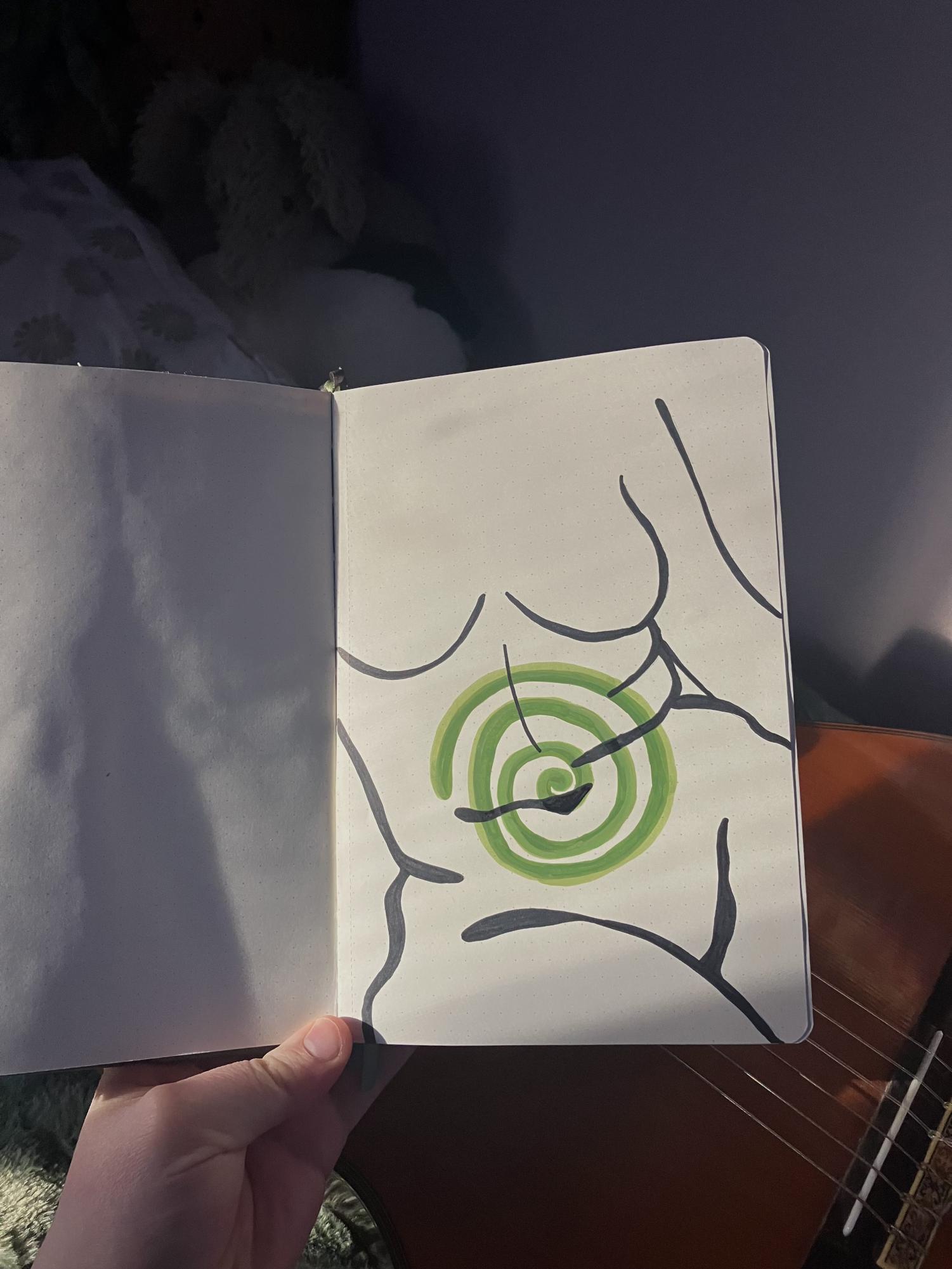
When I was fourteen, I begged my parents to let me have social media. I felt like I was missing out on important connections and ways to interact with people.
Now, three years later, I wish my social media apps didn’t have such a grasp on me. Primarily because, as a young woman who wouldn’t be considered “skinny” to most, social media can feel like a pit of constant comparison and anxiety. I find myself involuntarily being exposed to weight-loss and body image content on a daily basis. It almost feels unavoidable with how much it’s embedded into our algorithms and current culture. This constant bombardment of ideals and images feels purposeful, reinforcing the idea that industries rely on the monetization of our insecurities to survive.
I have come to believe that if every woman woke up tomorrow and collectively accepted our bodies as worthy without needing change, entire industries would collapse.
I’m not alone in feeling this way. Licensed psychologist and therapist Dr. Carolyn Lorente describes that the isolation and anxiety during the COVID-19 pandemic made many of her clients hyper-aware of their appearance during the frequent online interactions that arose from quarantine.
“This then triggered thoughts of judgement, shame, guilt, and often disgust,” Lorente says. “The pandemic’s lock-downs lessened opportunities for positive feedback in one’s environment from friends, peers, etc. that had to do with things other than appearance such as making the winning goal.”
Lorente details that it was during this time when GLP-1 medications started to be directly marketed to consumers as a weight loss medication. And because teenagers spend more time online, it created more exposure to advertisements for drugs whose financial success relies on our dissatisfaction with our bodies.
Even when I’m in bed in the evenings, watching comfort shows on my laptop, I’ll get an ad break for “the new FDA-approved GLP-1 drug”. I’ve always been constantly aware of my size, to how my stomach rolls in the shirt I’m wearing, to how my arms are bigger than the girl’s sitting next to me in class. I’ve started to wonder how our constant exposure and normalization of these ads and content affect our mental health and the way we’re conditioned to view and value our bodies.
That exposure is relentless. Eighteen year old Lacey Sponaugle describes herself as also being “a little on the bigger side,” until she developed a pretty bad eating disorder. She describes that watching the toxic culture around body image and weight intensify in recent years makes it hard to not cave to the pressure of joining this seemingly magic bullet weight-loss trend.
Sponaugle says, “every like five scrolls on TikTok you’ll see an ad for GLP-1 patches you can put on your skin to make you have reduced cravings, or Ozempic ads on your TV during the Super Bowl.” She says that she sees, “weight loss related content all the time on social media and also just unintentionally too, like celebrities that are obviously getting sickeningly thin, we have been seeing so much more of that recently.”
Our society profits off of us thinking we constantly need to change, teaching us to view ourselves as projects, not people. Industries have built their whole brands by selling us images and ideas of what we should look like. Sponaugle describes, “l’ve met so many women no matter how big or how small they are, they have all dealt with the same issues of people saying that ‘oh you’re too skinny’ or ‘you’re too fat’. It feels like we can’t do anything right.”
Being a woman often means being taught to suppress the very traits that make us most human. We’re expected to have no smell, no hair, no wrinkles, no flaws. We’re expected to smell and taste like gardens instead of sweat and skin. We’re told that to be “desirable”, we have to erase the things that make us unique, and shrink ourselves to be marketable.
And when we don’t have positive influences to nurture self-acceptance, we perpetuate a cycle of shame. Carolyn Lorente details that, “when the adults in the room don’t model the importance of the idea that we are valued for our own unique light, we see heightened anxiety around body shame. By focusing on how we look, we are doing our children a great disservice.”
Even now, self-improvement in our culture has turned toxic. The internet’s obsession with becoming a “high value woman”, with constant healing, optimizing, and up-scaling, is another way to package insecurity as empowerment. It’s not bad to want to grow and develop, to learn and heal, but when growth becomes a marketing strategy, it stops being liberation and becomes another form of control.
We are not brands. We are not start-ups. We are not objects that need to be endlessly refined to stay relevant. At some point, if you’re always trying to be better, trying to improve, trying to cleanse, you’re not allowing yourself to just be. We forget that we are allowed to just exist in this world. We forget that we are completely worthy just as we are right now. Growth takes time. And we’re bound to grow, because it’s in human nature, but we have time to do so.
We were already enough before anyone told us we weren’t.
Carolyn Lorente • May 6, 2026 at 7:24 am
Thank you for these words and for tackling this important issue. “We were already enough before anyone told us we weren’t.” I’m going to put this quote above my desk.