

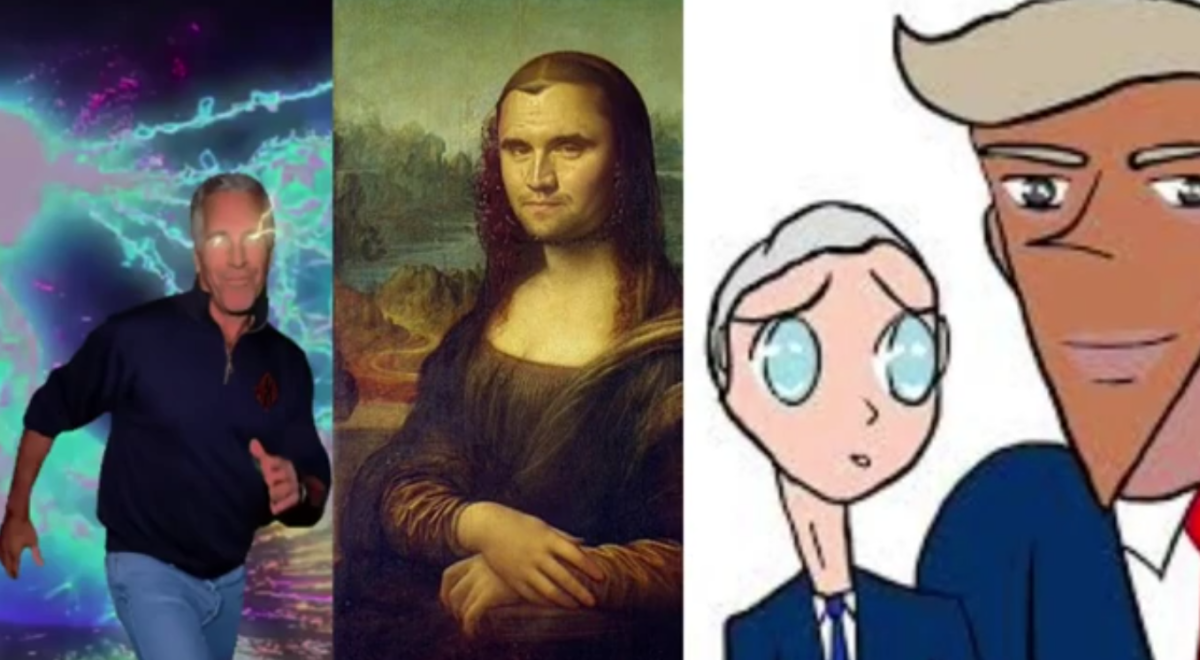
The word meme was originally coined 1976 by evolutionary biologist Richard Dawkins in his book The Selfish Gene. He used the term to describe a unit of cultural transmission in which an idea, behavior, or style can spread from person to person, changing and evolving along the way.
However, the definition has since changed. According to Merriam-Webster memes are now defined as “an amusing or interesting item (such as a captioned picture or video) or genre of items that is spread widely online, especially through social media.” The most common iteration of the modern meme has come in the form of online brainrot. Merriam-Webster defines brainrot as “mindless digital content” and the negative cognitive effects that come with consuming it.
Recently, brainrot has begun to include political events, figures, and situations in a wave of Epstein fancams, AI Charlie Kirks, and romantic ships between politicians. These videos and images attract millions of views, while making light of current events. But why do people create these videos, and what impact is it having on politics?
