

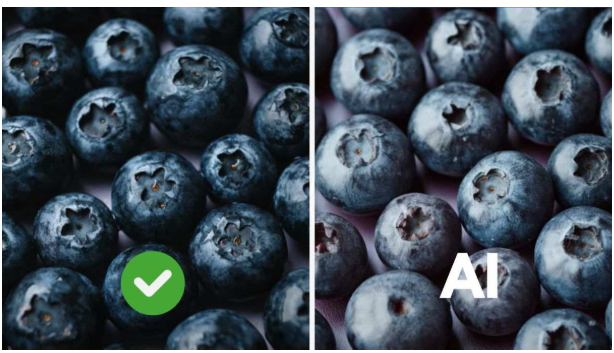
Since the beginning of AI, people have been skeptical of the uses of AI. In our current day, AI is in almost every single part of our lives. From medicine to education, AI is using large quantities of resources to contribute a decent portion of benefit and a large amount of harm. Worst of all, this problem will affect every single person on this planet because, after all, AI is simply an information-analyzing, pattern-recognizing machine. Artificial intelligence poses significant risks by accelerating the scale and believability of disinformation, which threatens to manipulate democratic processes. It frequently amplifies societal inequities and discrimination due to biased training data. Furthermore, generative tools empower bad actors to execute hyper-realistic scams and sophisticated cyberattacks. Could you tell? The past sentences from “Artificial Intelligence…cyberattacks” were generated using Gemini. It is realistically impossible to differentiate whether text is AI-generated or not. The same applies to images; AI-generated images are becoming so indistinguishable that they are capable of opening the door to fraud and copyright theft. On December 3, 2024, the FBI issued a public service announcement stating the following:
- Criminals use generative AI to create voluminous fictitious social media profiles used to trick victims into sending money.
- Criminals create messages to send to victims faster allowing them to reach a wider audience with believable content.
- Criminals use generative AI tools to assist with language translations to limit grammatical or spelling errors for foreign criminal actors targeting US victims.
- Criminals generate content for fraudulent websites for cryptocurrency investment fraud and other investment schemes.
- Criminals embed AI-powered chatbots in fraudulent websites to prompt victims to click on malicious links.
For some context to the AI problem, we have to look back. Massive companies in the past 5 years have begun investing heavily in AI infrastructure and resources. Data centers have been opening around the world to power our new AI rulers’ models. Unfortunately, there are many problems in many aspects. For starters, AI data centers use sinful amounts of electricity, which drives up energy prices for the average consumer. Because of this, AI data centers utilize gas turbines, which spew toxic gases into the atmosphere, poisoning nearby residents. The AI models themselves are simply chatbots which these companies allow us to use for free to condition us into speaking to AIs, which will eventually make them profit later on. These data centers also consume literal tonnes of water. As stated by the EESI, “A medium-sized data center can consume up to roughly 110 million gallons of water per year for cooling purposes, equivalent to the annual water usage of approximately 1,000 households.”
Even with AI being as powerful as it is, there is still hope. There are ways to tell if something is AI-generated or not. You can spot AI-generated images by checking for structural anomalies (like malformed hands, distorted text, and warped backgrounds), checking for digital watermarks, and using dedicated online analyzers. AI often struggles with physical logic and fine details. As for AI-generated text, AI detectors can give an estimate as to how likely a text is AI by checking for patterns in sentence length and tone.
