

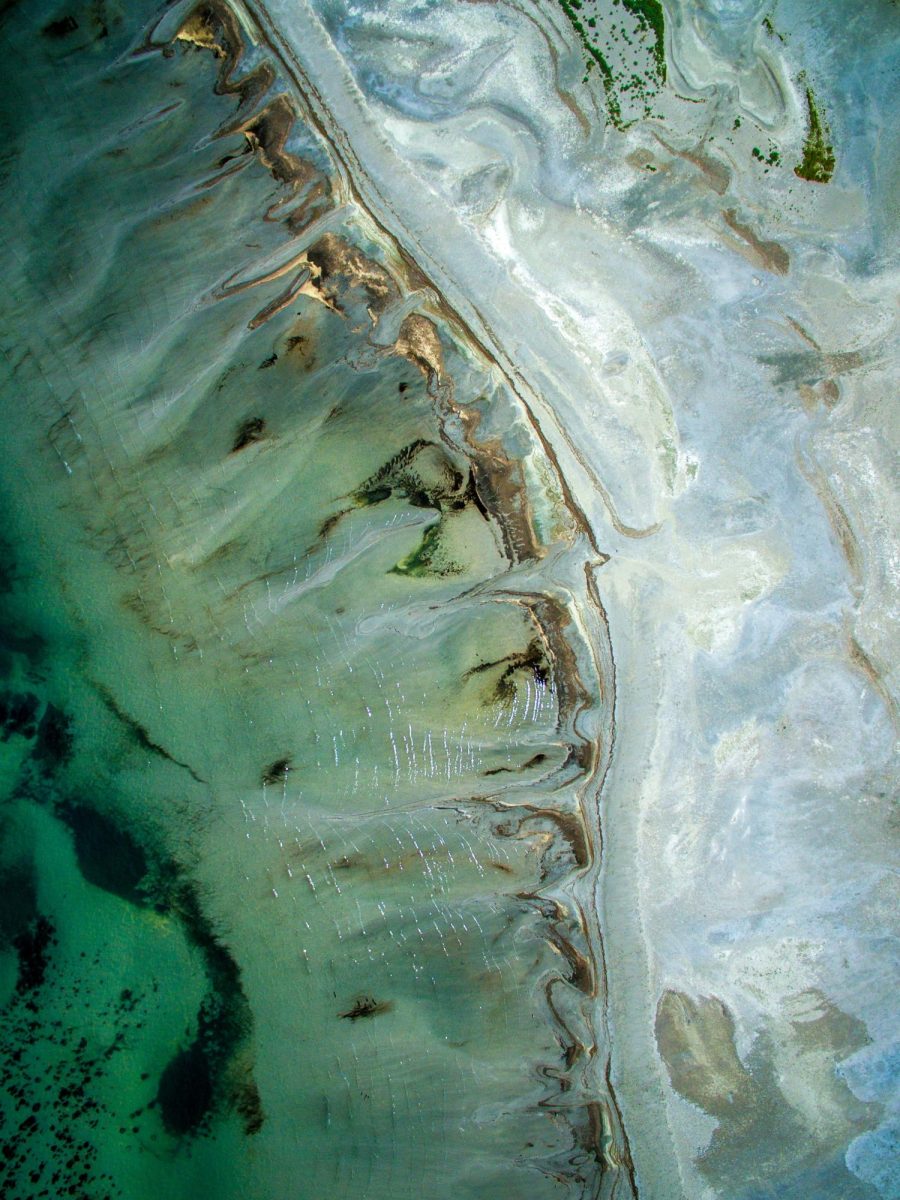
The air in Salt Lake Valley often smells faintly of brine, a geographic calling card reminding the nearly 2.5 million residents of the colossal, shallow lake that anchors their metropolis. But lately, when the wind whips down from the receding shoreline, it carries a new, lethal component: dust.
In the summer of 2022, the Great Salt Lake (GSL) dropped to its lowest recorded level, 4,188.8 feet above sea level. This slow, steady retreat, driven by years of drought and excessive water diversion for agriculture and urban use, has exposed approximately 800 square miles of lakebed—a vast, shimmering expanse that ecologists now refer to as the “Arsenic Alps.” This exposed lakebed is a repository of pulverized toxic sediment, and its desiccation has triggered a slow-motion environmental and public health crisis for the entire region.
The Problem: A Toxic Landscape Uncovered
For over a century, the GSL has served as the catchment basin for heavy metals like arsenic, lead, copper, and sulfur from regional mining and industrial runoff. While the lake was full, these pollutants were safely sequestered beneath a protective layer of water and brine.
Now, as the lake shrinks, these heavy metals are aerosolized. During high winds, enormous, visible plumes of beige dust, known as “lake-effect dust,” are swept up and delivered directly into the densely populated Wasatch Front, the narrow corridor stretching from Ogden to Provo.
“This is fundamentally different from a typical desert dust storm,” states Dr. Elara Vance, a lead environmental toxicologist at the University of Utah’s School of Medicine. “We are facing chronic exposure to particulates laden with known neurotoxins and carcinogens. Every resident, from infants to the elderly, is breathing in a decades-worth of industrial waste.”
Studies estimate that the arsenic concentration in the exposed sediments is up to 12 times higher than background levels in other Utah soils. The microscopic particles bypass the body’s natural defenses and are deposited deep within the lungs, risking long-term respiratory disease, cancer, and developmental issues.
Ecological and Economic Fallout
The crisis extends far beyond public health. The economic and ecological ramifications strike at the heart of Utah’s identity:
- Ecology: The GSL supports over 4 to 6 million migratory birds annually. Its hypersaline ecosystem relies on brine shrimp and brine flies. The lake’s collapse threatens to render critical nesting and feeding habitats unusable, turning a globally significant waypoint into a dead zone. The brine shrimp harvesting industry, valued at over $57 million annually, is already facing severe restrictions due to low water levels and dangerously high salinity.
- Climate & Snowpack: The lake provides a vital moisture loop, contributing significantly to the snowfall that fuels the state’s renowned powder and its $2.5 billion snow sports economy. As the lake surface shrinks and cools, this effect weakens, contributing to lighter, drier snow seasons.
The Search for Salvation
Solving the GSL crisis is primarily a matter of water, or the lack thereof. Roughly 70% of the water that feeds the lake is diverted for agricultural use, particularly in alfalfa and hay farming, while residential and industrial use accounts for the remainder.
While legislative efforts have been slow, recent measures signal political urgency. In the past three years, the Utah legislature has passed laws allowing for the leasing of water rights back to the lake, a major shift from the use it or lose it doctrine that previously governed water allocation. Yet, critics argue the measures are insufficient to close the massive gap. Experts estimate the GSL needs an immediate influx of one million acre-feet of water to stabilize and then 2.5 million more to reach a safe, sustainable level.
The challenge now is balancing the immediate needs of farming, industry, and a rapidly growing population against the existential threat posed by a drying lakebed.
The Wasatch Front stands at a tipping point. The iconic salt flats, once a symbol of the West’s rugged purity, are now a growing source of poison. As the autumn wind sweeps the toxic dust into the city’s clean, mountain air, the question remains whether the political will and public awareness can mobilize fast enough to save the region’s environment, and its residents’ health, from the consequences of its own thirst.
