


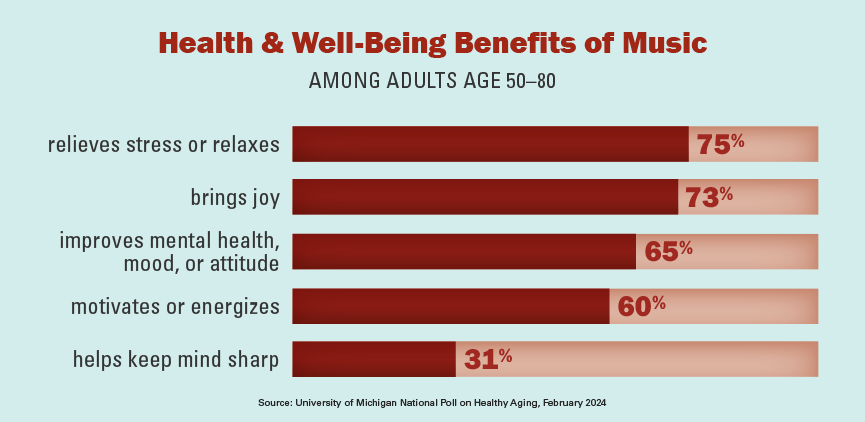
New research suggests that listening to music can reduce cortisol, the main stress hormone. It has also been proven that listening to music can help people perform better in high-pressure situations and improve coordination. But sometimes we ignore how big of an influence it can be emotionally, depending on what genres we listen to can have a great impact on our day to day routines. Something as simple as a song can change our mood completely, reaching for the subconscious part of our brain, making us feel emotions like sadness, anger, peace, or joy.
Music reflects a lot of our personality and behavioral tendencies. According to psychologist Kendra Cherry in the article “Music Preferences and Your Personality”, people define themselves through music and use it as a means to relate to other people. That’s why people sometimes feel defensive about their taste in music. A criticism of their music feels like a personal affront. According to the “Big Five” personality traits, listeners typically show these preferences:
- Neuroticism: Angst-filled, or sad music (e.g. Slipknot, Korn, Cannibal Corpse, and Linkin Park).
- Extraversion: High-energy, upbeat, and socially stimulating sounds that reflect outgoing personalities (e.g. Tyler “The Creator”, Ice Cube, Mac Miller, Rage Against The Machine, and AC/DC).
- Openness: Lively, joyful, and sophisticated (e.g. Frank Sinatra, The Beatles, Laufey, and Daniel Caesar).
- Agreeableness: Warm and relaxed (e.g. SZA, Olivia Dean, and Malcom Todd).
- Conscientiousness: Reference for structured, positive, and non-aggressive genres (e.g. Bruno Mars, The Weekend, and Kendrick Lamar).
It becomes clear that music does more than reflect who we are; it actively shapes our mindset. From the moment we wake up to the time we go to sleep, the songs we choose can shift our mindset in subtle yet powerful ways. An upbeat song in the morning can create a sense of motivation and energy. On the other hand, slower, calmer music can ease stress and provide comfort.