

With Science Fair fast approaching, sophomores and seniors are working on their backboards, practicing their presentation skills, and making final adjustments to their projects. This year’s Science Fair is set to occur on January 28th in the gym, where students will present their projects to judges, teachers, and classmates. For most seniors, their Science Fair project will also be their RP (Research Practicum) project, which will be presented in April.
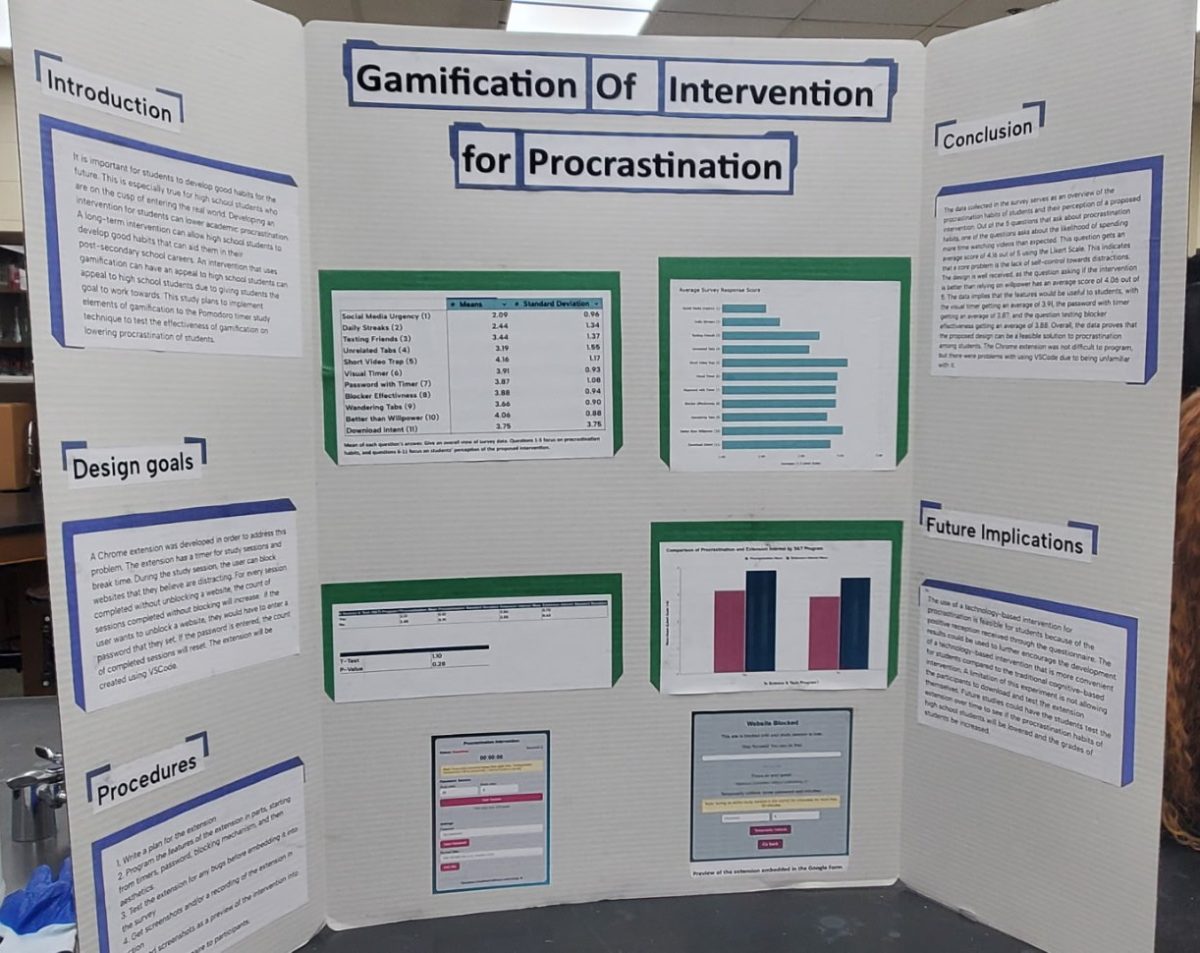
One of these seniors, Abisaac Pearce, is working on a project about procrastination and an online-based intervention to prevent it. Her project is based on the Pomodoro method, “a timer that sets a time for people to study, and a time for them to take a break.” Ironically, the idea came to her while she was complaining about procrastination. Pearce was frustrated that she didn’t have a topic despite thinking about it for a while, blamed her lack of progress on procrastination, and wished she had the premium version of a study timer she was using, because her version was “practically useless.” She was also thinking about other students, as “procrastination is a common problem.”
Another senior, Paola Aldana, is doing a project based on her internship. The project focuses on “vascular health in middle-aged women using hormonal IUDs.” Vascular health refers to that of the blood vessels, and IUDs are short for “intrauterine devices”, which are used as birth control. Her project is ongoing—which is common for RP students doing an internship—but in the meantime, Aldana is reviewing information and memorizing all of the vocabulary necessary for next week. She advises underclassmen to regard Science Fair “as a learning experience” and use their mistakes to prepare for senior year.
Seniors aren’t the only ones preparing for next week; sophomores, such as Adrian Holtz Velasco, are showing progress, too. For his project, Velasco is “creating a device that can detect drowning using an AI decision tree.” His experience as a lifeguard and the “decreasing number of lifeguards on coastal beaches” influenced his topic choice. Right now, Velasco is preparing his final device to ensure the code works properly and to give the system “a sleek, all-in-one design.”
Despite weather concerns, seniors and sophomores are working hard to ensure their project is the best it can be. However, until scheduling changes are confirmed, students and teachers can look forward to learning more about the aforementioned projects, along with others, on January 28th.