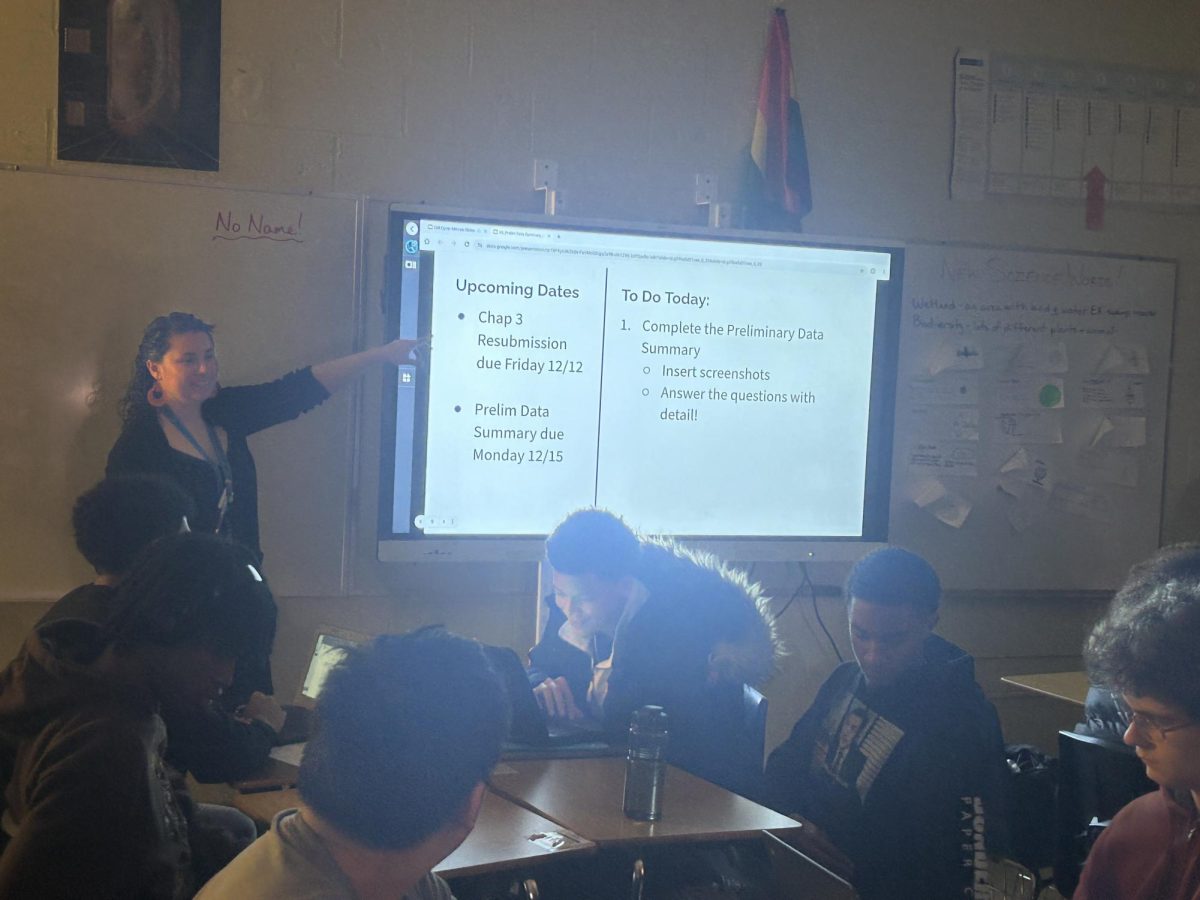
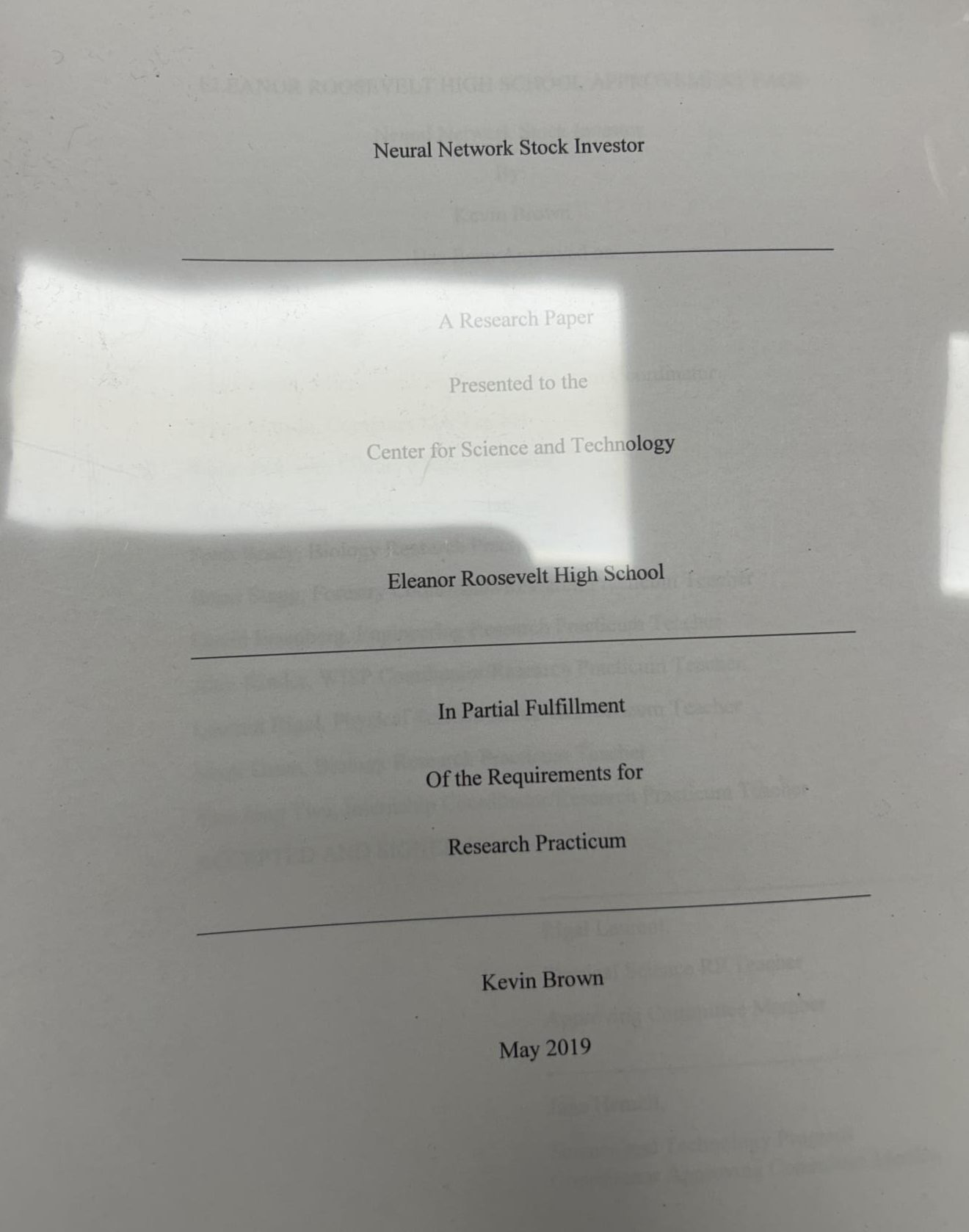
Eleanor Roosevelt’s Research Practicum (RP) course is a year-long research project for the school’s Science and Technology(S/T) seniors, ranging from a variety of different sciences, such as biology, chemistry, computer science, and physics. The course is meant to teach S/T students important laboratory and research skills for use in future studies. The bulk of the work consists of 5 chapters, each of which details a different part of the research process. The culmination of the course is the symposium, in which students present their projects on posters in April.
Historically, students had one of two options when deciding their method of approach to RP. The first is to have a normal RP class in which students must find their own research subject, independently collect their data, and construct their reports. The second one is an Internship class taught by Dr.Twu, where students apply during their junior year to be an intern for a scientist or university for an already established project. The selection of interns is rigorous and judges students based on academic and extracurricular achievements, along with teacher recommendations.
However, during the 2020 school year, a new option for RP emerged in which students could opt out of having an RP class in favor of taking two Prince George’s Community College classes per semester, being referred to as option 4. “Not a lot of people took, or even knew about option 4 when it came out; however, slowly over the 2022, 2023, 2024 school years, many more students became aware and decided to take advantage of the opportunity,” recalls Mr. Brady, who has been a Science and RP teacher at ERHS for 24 years.
Although option 4 had become a very popular option for S/T students going into their senior year, PGCPS announced midway through the 2024-2025 school year that all S/T students were mandated to complete an RP project. However, option 4 would still be available with some modifications. Those being that students doing option 4 would not have to do the symposium or create a poster; however, they would have to enroll in 2 PGCC classes per semester.
Many students feel, however, that option 4 is not a valid replacement and still carries much of the workload of a typical RP project. “I was honestly really angered by option 4; there’s no real significant difference between it and normal RP,” stated senior Douglas Garcia, who had originally intended to forego doing an RP project in favor of doing dual enrollment. “Although I am really irritated by the decision, I’ll try my best to make the experience enjoyable and put forth my best effort given the importance of the project,” voiced Garcia.
“I was more annoyed by the timing of the announcement than the actual announcement, could they not have discussed this earlier, like the summer before junior year?” recalled senior Leo Foreman. “For the decision to come almost a third of the way through junior year really feels like they blindsided us, practically everyone I know was planning on doing dual enrollment as a senior,” Foreman noted.
The general sentiment of the majority student body seems to be one of reluctant compliance. Most students feel that, although they do not like the decision, they will conduct their projects to the best of their abilities. It is important to note that not everyone feels this way about the decision. Many students, mostly those who have internships, do not mind the change.
“I didn’t really mind, because I was already planning on doing RP to gain research experience,” remarked Senior Kai Waters, who is doing an Internship RP at the University of Maryland. Another UMD intern, Arfan Rashid, had similar comments: “It does kinda suck for everyone who didn’t want to do RP, but it was something I had already planned on doing since 9th grade, so it didn’t really affect me.”
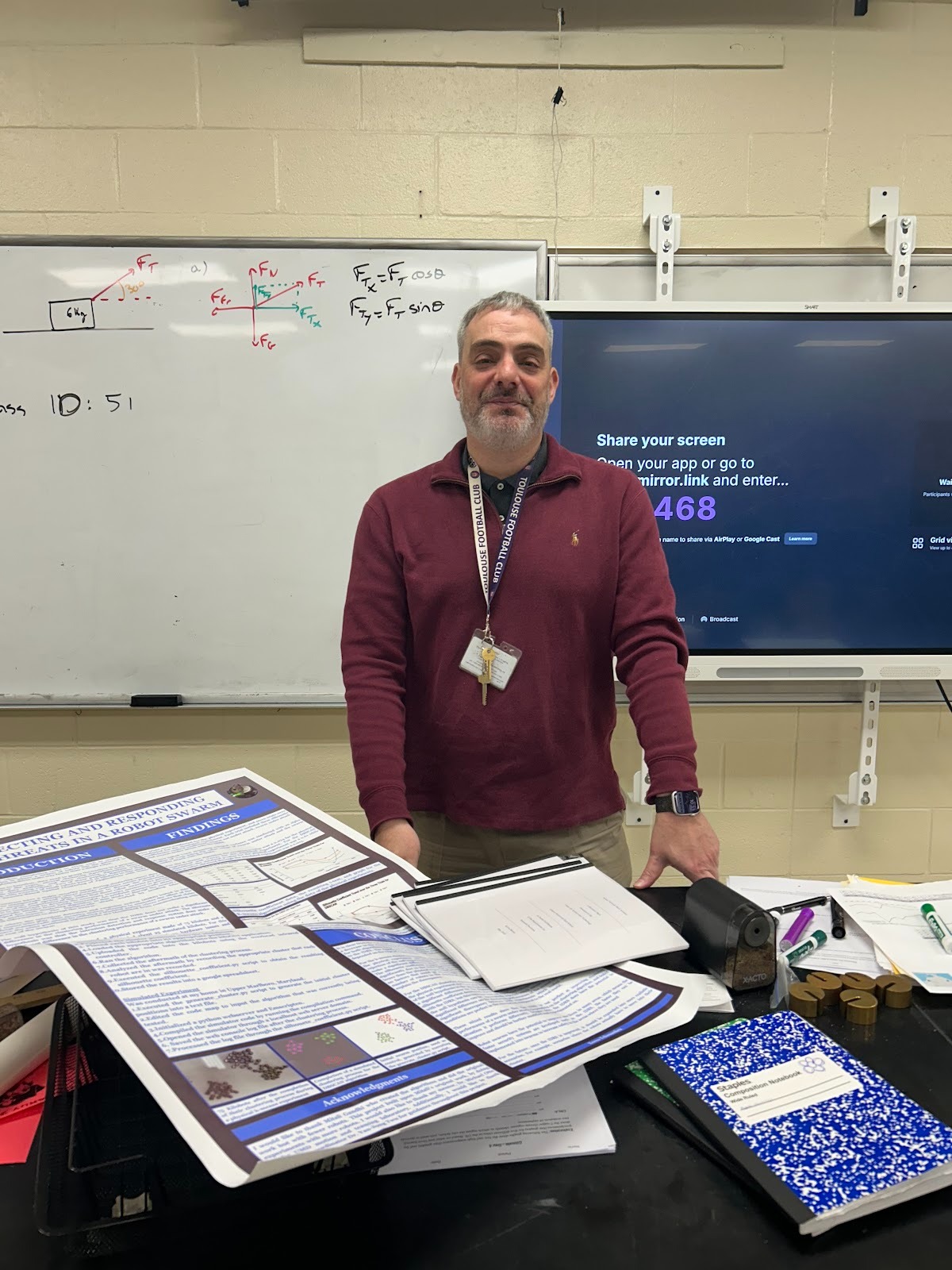
Many RP Teachers, along with a few students, warmly welcomed the change and see it as a positive. “The decision was definitely one I was in favor of,” remarked Mr. Brady. Feeling that RP teaches extremely valuable scientific research practices, along with independence for students. This sentiment is also shared by Dr. Rigal, another RP and science teacher. “ I very much feel that this is a very positive decision. Numerous times have I had past students tell me about the leg up RP gave them in college, whether it be knowing how to organize data, run tests, do independent research, or just general time management.” The positives of RP were also noted by Waters, “I like how RP forces people to explore outside their comfort zones, it’s definitely a positive.”
In the midst of the disagreement over the overall function and effectiveness of RP, something that everyone can agree on is the course’s heavy workload. “Keeping up with annotated bibliographies and other deadlines on top of my other classes really hasn’t been easy, but I’ve been able to do so,” mentioned Rashid. Foreman noted that “It hasn’t been easy keeping up with everything, but I understand it’s required of me to do so.” The stress of the workload hasn’t been lost on the teachers either: “The jump from having 17 kids to around 35 in class hasn’t been easy, but I have adjusted accordingly, I feel,” mentioned Dr. Rigal.
The reintroduction of mandatory RP has brought with it much discussion about the purpose and place of the course and has not come without resentment. Despite this, many still feel that the course is needed and should be highly respected, believing it serves to enrich student learning and develop critical research skills. The school will have to wait until April to find out if either side’s claim proves to be true. Until then, both students and teachers will have to work through the trials and tribulations of RP to produce high-quality and useful scientific research.