

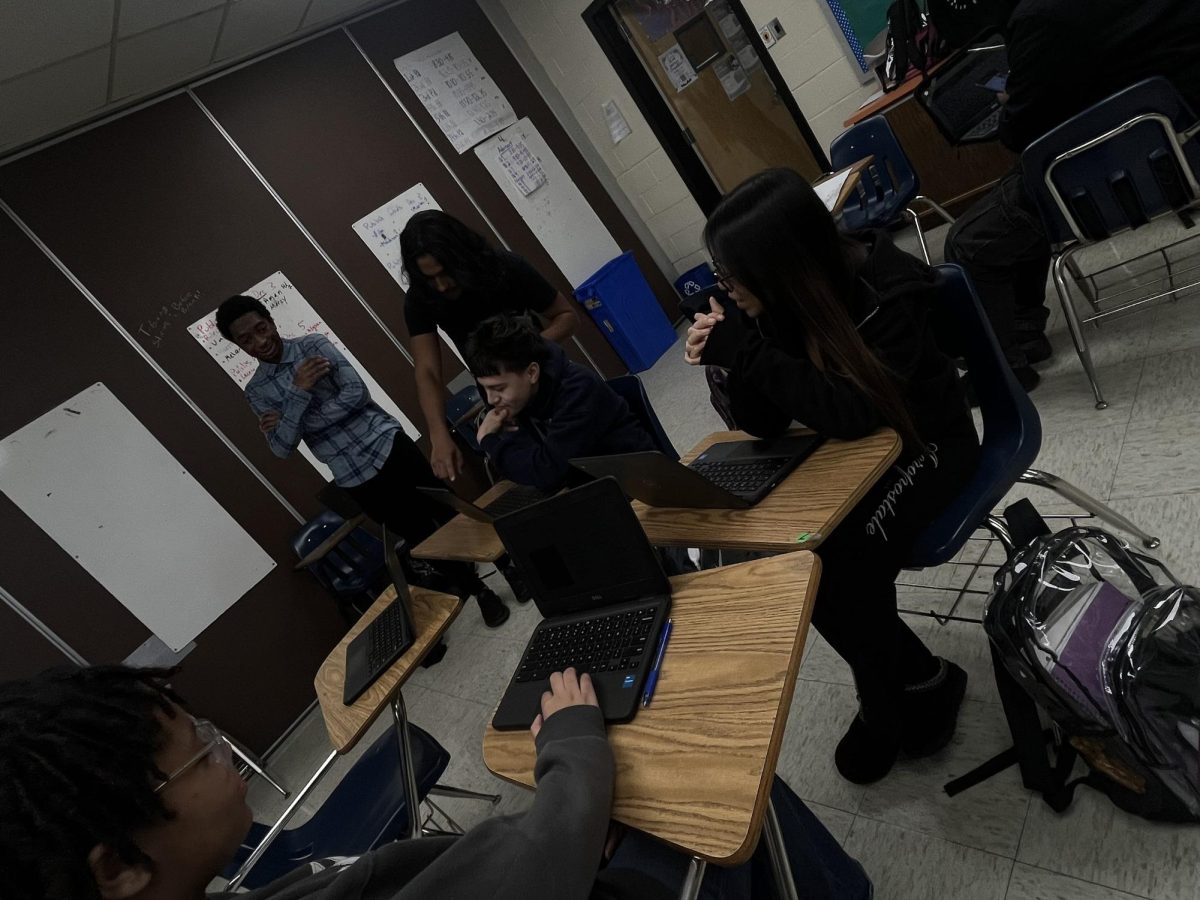
More often than not, in school you will end up working in a group at some point. No good or bad experience is guaranteed when students work together, but there are ways to make the experience better. When students collaborate on group projects, certain factors can limit success — such as clashing personalities, unclear roles, or communication barriers. By removing negative factors and adding positive strategies, students can improve their overall experience and increase their success in group work.
Group work is a common part of school life, especially at ERHS, where most classes use group projects throughout the year. Even though group work is supposed to help students learn from each other, it doesn’t always go smoothly. Some students feel overwhelmed, some feel ignored, and others feel like they are doing all the work. Understanding why group work sometimes fails helps us understand how to fix it and make the experience better for everyone.
One of the biggest issues with group work is the way roles are assigned. According to Edutopia, “Certain role schemes can concentrate power and influence with those who already have it, leading to inequitable participation, effort, and engagement.” This means that if roles aren’t planned well, a few students might take over while others barely get involved. When roles are chosen poorly, some students dominate discussions, which causes unfairness and limits the group’s overall success.
Another challenge is communication. When students don’t feel comfortable speaking up or when stronger personalities take over, important ideas are lost. A teacher quoted in Edutopia explains that “Even the kid who thinks they are the top student can learn something from the other students,” reminding us that every student brings something valuable to the table. Collaboration works best when everyone is heard and respected, not just the most confident group members.
There are also strong strategies that can make group work better. Edutopia suggests using thinking routines like think-pair-share, the jigsaw method, and turn-and-talk. These routines “present students with different scales of conversation, allowing them to externalize their ideas with a small group before sharing with the class at large.” These methods help break communication barriers by giving students time and space to think before speaking, which leads to more balanced participation and stronger group results.
When it comes to group work it is also important to get the feedback of the person who assigns it. Brandon Stewart, Chemistry Teacher, at ERHS someone who’s fond of his students working together states that one of the most common challenges seen in students during group work is “troubles staying on task”. Strategies that Mr. Stewart recommends for improving communication in groups include “making sure that everyone can voice their opinion and to implement better collaboration skills”. Mr. Stewart says you can improve participation in group projects “by making learning academically competitive, where it’s fun for everyone to want to compete”. Mr.Stewart states that what he notices in groups that work well together is “equal work ethic and good communication”.
Another very important perspective is from those who the group work is assigned. Junior Divine Lawal states she prefers the division of work within groups be “based on one another’s strengths”. She states that what helps her stay focused when working with others is “The fear of being the incompetent member”. Divine believes the thing that most contributes to problems when in a group is “Someone not carrying their own weight”. With her most stressful part of working in a group is “Having lazy peers” or “people who think they can just sit back and relax while others do the work”.
Improving group work doesn’t just help students in school — it also prepares them for teamwork in the real world. Whether in jobs, clubs, or everyday life, knowing how to communicate, cooperate, and share responsibilities is an important skill. With the right strategies in place, group work can become less stressful and more successful for everyone involved.
