

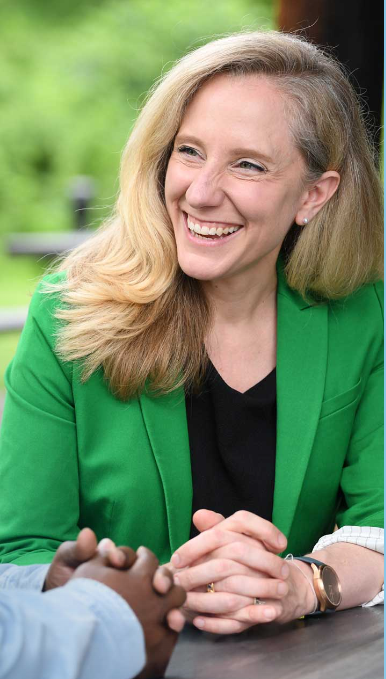
Virginia’s new Democratic governor, Abigail Spanberger, stepped into office on the 4th of November with a national spotlight on her shoulders, and for good reason. As the first female governor of Virginia, the choices she makes now won’t just shape her state’s trajectory but will signal how her party plans to navigate a country that’s more politically mixed than ever. If she wants her agenda to resonate beyond Richmond, she’ll need to read the room, trim the partisan excess, and show she can balance progressive goals with the broader mood of the nation.
Virginia has shifted politically over the past decade, bouncing between Democratic and Republican leadership as its suburbs grow and its rural regions hold steady. The new Democratic governor takes office at a moment when voters nationwide are showing less patience for extremes and more interest in practical problem-solving. Her approach in the early months will help define not only her standing at home but also how her party is perceived as it looks ahead to national elections.
Several points in her platform already hit the national sweet spot. Her push for expanded infrastructure funding reflects a widespread desire for roads, bridges, and transit systems that actually work. Voters across the spectrum agree that neglected infrastructure slows down the economy. She’s also prioritizing public schools by increasing teacher pay and modernizing outdated facilities. These aren’t partisan wishes; parents and educators everywhere want stability in their schools and a learning environment that feels safe, updated and fair.
Her clean-energy goals connect with national trends, too. Most Americans support renewable energy when it’s framed as a long-term investment that lowers bills and creates jobs. Her plan to grow offshore wind capacity and streamline permitting for solar farms fits that mindset, especially since the state is already positioned as a regional hub for those industries.
Other parts of her agenda, without some fine-tuning, may run into trouble. Her proposal to introduce a statewide paid family leave program is popular among many voters, but the funding mechanism she floated during the campaign relies on payroll tax adjustments that could be a tough sell in an era when people are wary of anything that feels like a financial hit. Nationally, paid leave polls well, but support drops when the funding becomes complicated. If she wants this program to last, she’ll need a version that’s straightforward, affordable, and tested.
Her plan to tighten firearm regulations is another area that might need recalibration. Measures like universal background checks have broad support, but proposals such as expanding red-flag laws or limiting certain weapon purchases tend to split voters more sharply. In a state with a long tradition of hunting and gun ownership, she’ll need to work with bipartisan coalitions and present clear data to avoid the perception that the policies are coming from the national party playbook rather than Virginia’s needs.
A more measured path doesn’t mean watering down her goals. It means building them in a way that holds up across the state. With paid leave, she could start with a pilot program for state employees or partner with private insurers to reduce the upfront cost. On gun policy, she might focus on the enforcement of existing laws before expanding new ones. For environmental issues, she can pair renewable-energy development with job-training programs targeted at regions that rely on fossil-fuel industries. These adjustments would help her protect her priorities while keeping them tied to the concerns of Virginians who aren’t aligned with her party.
The country is watching to see whether she can read this political moment with clarity. Voters aren’t asking her to abandon her values, but they are looking for leaders who can bridge the gap between ambition and practicality. If she calibrates her agenda with the right balance of conviction and flexibility, she’ll not only strengthen her leadership at home but also help reshape how her party approaches a country that’s more complicated than any single platform can capture.
