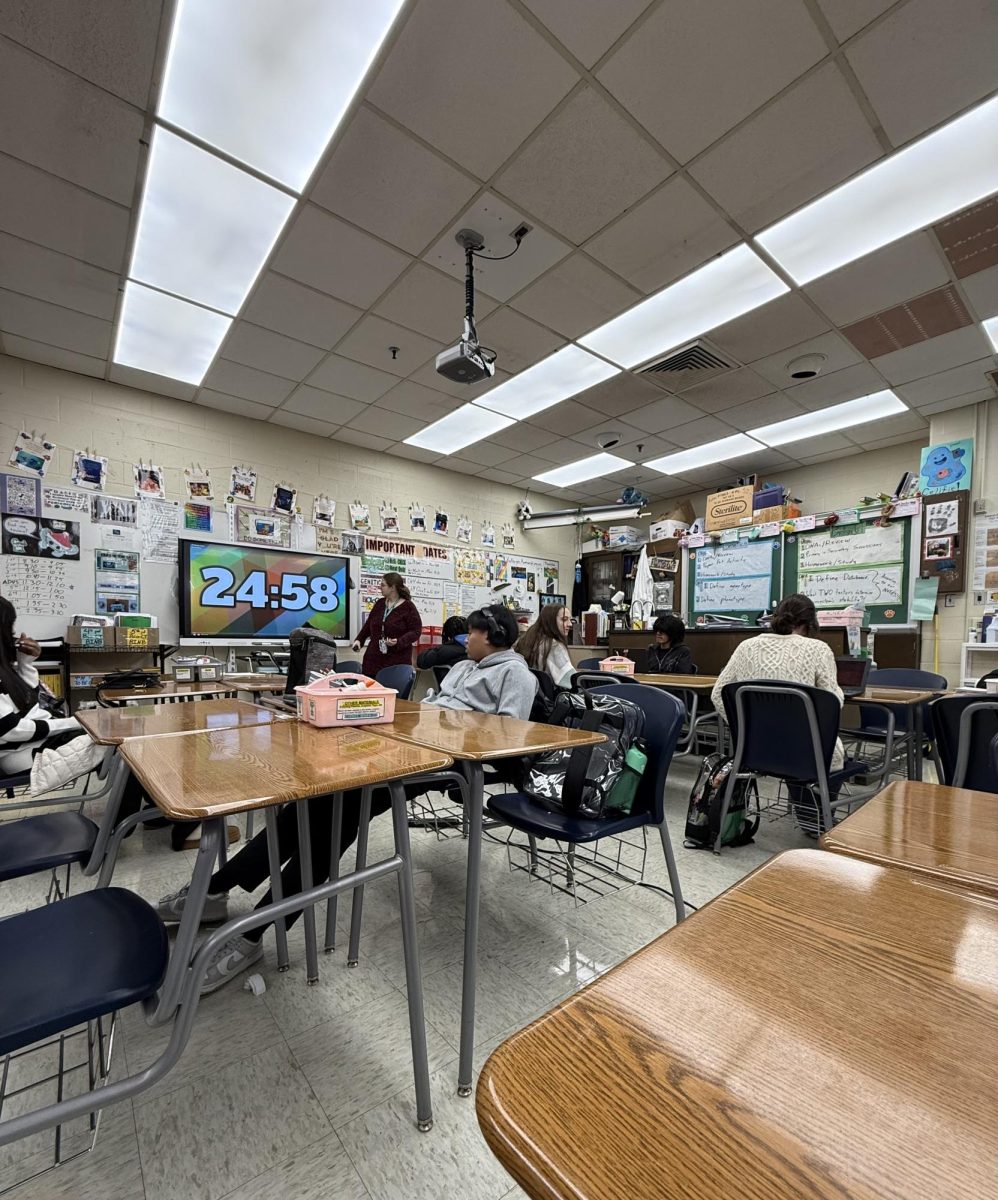
This school year, Prince George’s County (PGCPS) implemented a new system mandating bi-weekly advisory periods across all schools. The policy aims to foster a more connected and positive community, while also educating students on important subjects. So far, sessions at schools like Eleanor Roosevelt High School (ERHS) have covered a variety of topics, including dual enrollment, anti-bullying, quarter 1 reflections, and information on hunger and homelessness.
However, initial opinions on these sessions have been overwhelmingly negative. Many students feel these sessions are ineffective, and think there could be a better use of this designated time.
For students, the main complaint is repetition and a lack of realistic value. Tahara Camara, a senior at Eleanor Roosevelt High School, expresses her frustration as she feels “Advisory hasn’t really benefited me that much, because it’s repetitive topics that we go over in the code of conduct assemblies, and it has gotten to a point where it just starts to bore a lot of the kids”. Camara suggests that this time should be used to implement topics on essential life skills. She feels it is crucial to teach students “how to budget, manage credit scores, or explain finance vocabulary like interest, as these are topics many students leave high school not having any knowledge on”. She highlights that she has seen no significant improvement within the ERHS environment since advisory began.
Senior Glory bluntly calls the sessions, “a waste of classroom time.” She points out successful models that take place at other schools, such as Charles Herbert Flowers High School’s “Power Hour” as a more beneficial alternative. “Power Hour provides students a period of rest, reflection, and catching up on missing work.” Audu argues that implementing sessions like these at ERHS that allow for “extra studying time” could reduce stress and decrease the number of students skipping class because they feel unprepared for an upcoming test or deadline. She adds that since advisory began, the ERHS community has experienced “zero change” and suggests a possible decline with an increased amount of fights and “rowdy” student behavior.
On the other hand, some faculty believe advisory periods have the potential to be valuable to students with student engagement and a more inclusive curriculum.
Kendrick Trader, a history teacher at ERHS, feels that advisory can be beneficial to students, but argues that students are not taking it seriously. He believes appreciation would increase by “having topics that they care about”. Mr. Trader proposes some useful topics like college preparation, financial literacy, storytelling, and entrepreneurship advice. Regarding financial literacy, he emphasizes that students could “learn about ways to grow money through investments, stocks, bonds, and real estate” addressing their current lack of education on such important topics. He also highlights the ERHS community creativity, noting that “allowing students the opportunity to tell their stories in artistic ways is always a good thing”.
When asked about Audu’s suggestion of a Power Hour session, Mr. Trader agrees, stating “that’s a good idea”. He stresses the importance of mental health days and the importance of “reset and refresh” days as school can be extremely demanding on both students and teachers.
PGCPS’s intent to create a stronger, more positive community is on the right track. However, the current execution appears to be missing the mark and leading to widespread student disapproval. It is clear that students and teachers share a common vision for a more useful advisory time that would engage the students while providing them with beneficial support.
If PGCPS integrated student and teacher feedback directly into the curriculum design it could avoid wasted time. Gathering opinions on session content is the most direct path to increasing effectiveness, participation, and achieving the goal of building a stronger, more engaged student body.